
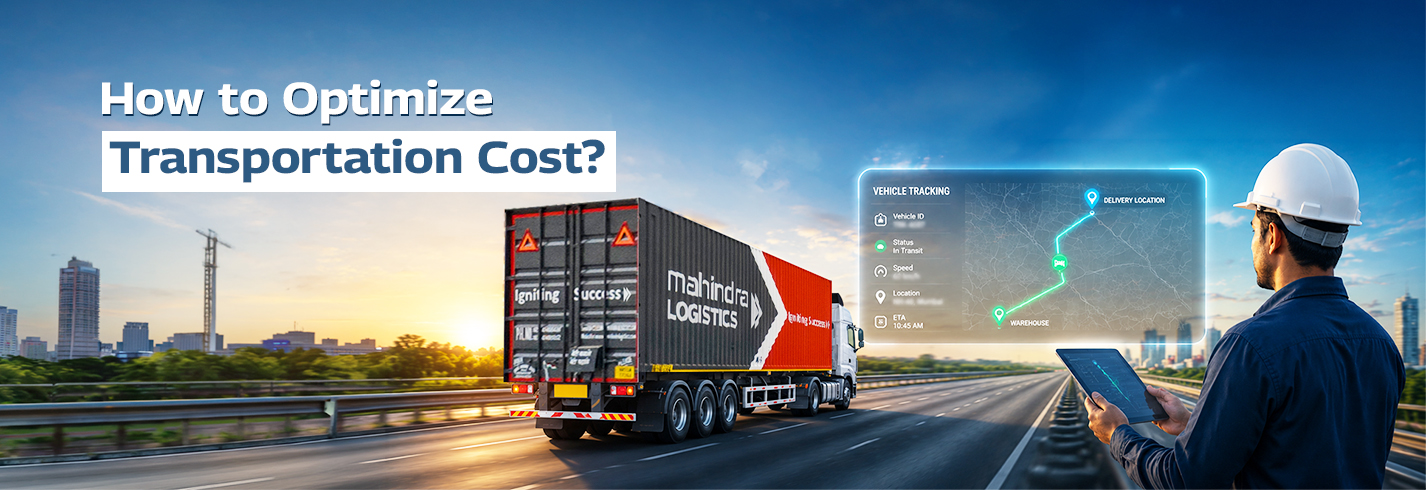
4 Ways LOGIFREIGHT Helps Optimize Transportation Costs
Transportation costs lower margins faster than most businesses expect. Transportation accounts for 59.1% of total logistics expenditure, and for companies managing high shipment volumes across multiple locations, even a small inefficiency can translate into significant losses over a financial year.
The problem is that most of these losses are not visible until they have already accumulated. LOGIFREIGHT by Mahindra Logistics is built to change that. It is an integrated transportation management platform that brings shipment planning, fleet efficiency, real-time visibility, and cost control into one connected system.
Why Transportation Cost Optimisation Matters Today
Running a supply chain today is not what it was ten years ago.
- Businesses now manage shipments across more locations, customer expectations around delivery timelines have grown more demanding, and operational margins have narrowed. The complexity has grown, but for many companies, the tools they use to manage it have not kept pace.
- What makes this harder is that traditional logistics processes often hide their true costs. A vehicle returning empty after a delivery, a truck dispatched at 60% capacity, a shipment waiting at a loading bay because no one has confirmed the slot, none of these show up as a line item, but they all affect what you actually spend on transportation.
- This is why businesses are moving toward technology-driven transport management systems. These platforms are not just software; they function as operational intelligence tools that help teams plan better, respond faster, and reduce the kind of friction that compounds into major cost inefficiencies.
1. Route Optimization Reduces Fuel and Transit Costs
adds to fuel spend. Every inefficient transit path adds time. And when you are running dozens or hundreds of shipments a day, those small inefficiencies stack up quickly.
- LOGIFREIGHT addresses this through intelligent route optimization that covers linehaul planning, hub-and-spoke operations, and multi-leg network movement.
- Operations teams get route visibility built into their planning workflow, which means decisions are based on actual data rather than habit or guesswork. Shipments move along optimized paths, and deviations are easier to spot and correct in real time.
- For businesses where fuel and transit costs are a significant portion of logistics spend, this kind of structured route planning leads to measurable reductions across both.
2. Smarter Load Planning Improves Shipment Efficiency
A vehicle that leaves at 60% capacity is a vehicle that costs you full price for partial output. This happens more often than it should, and it almost always comes down to how load planning is being done. When it is manual, rushed, or based on incomplete information, vehicles move with excess unused space, and costs rise without any corresponding gain.
- LOGIFREIGHT includes LOGIOPT Load Optimization, which brings intelligence into this process. The system supports shipment consolidation, automated load allocation suggestions, and planning that pushes vehicle utilization toward and above the 85%
mark. - Instead of filling vehicles based on availability and rough estimates, planners work with recommendations grounded in actual shipment data.
- Fewer trips to cover the same volume, lower per-shipment transportation costs, and better use of available capacity are the outcomes when load planning is done properly.
3. Reduced Detention Through Real-Time Visibility
When a vehicle is held up waiting for loading confirmation, documentation, or a dispatch slot, the meter is running. Multiply that across multiple locations and regular shipment cycles, and it becomes a serious operational expense.
- LOGIFREIGHT reduces detention through live tracking, automated email and SMS alerts, POD visibility, and mobile applications for both operations teams and customers.
- Everyone involved in a shipment has access to the same real-time information, which removes the back-and-forth that typically causes delays. When coordination is digital and automatic, vehicles move faster and idle time drops.
4. Better Fleet Utilization and Analytics Dashboards Enable Smarter Decisions
Two things drive sustainable improvement in transportation costs: using your assets well and understanding your operation clearly enough to know where the gaps are.
- On the fleet side, LOGIFREIGHT supports round-trip planning, return load optimization, FTL movement management, and milk-run planning.
- These capabilities reduce empty runs and improve how vehicles are allocated across the network, which directly lowers per-trip costs and improves overall transportation ROI.
- On the visibility side, analytics dashboards give teams a real-time picture of pending dispatches, delivery status, and POD aging.
- When this information is structured and accessible, operational bottlenecks become visible before they escalate.
Over time, this data-driven approach to logistics management creates the kind of continuous improvement that produces long-term reductions in transportation spend.
Conclusion
Transportation cost optimization is not something you solve once. It requires consistent attention, the right tools, and operational visibility that lets you act on what you see. LOGIFREIGHT brings together reduced detention, better fleet utilization, and real-time analytics dashboards in one platform. This gives businesses the infrastructure to manage transportation costs with far greater precision.
To explore how LOGIFREIGHT can work for your business, reach out at enquiries@mahindralogistics.com.