

India’s total vehicle parc was about 226 million in 2023 and is expected to rise to roughly 494 million by 2050. This raises service expectations and reduces acceptable downtime for customers. In this environment, agility means fast, visible, damage‑free fulfilment from central DCs to dealers and workshops, underpinned by robust auto logistics transport and data‑led decisions. Let’s outline a practical framework covering network design, multimodal flows, technology, last‑mile execution, and governance.
Agility begins with rapid response to demand spikes driven by model refreshes, campaign pushes, and regional seasonality, without resorting to emergency freight as a default. It calls for high availability for fast‑moving SKUs while protecting economics on the long tail through pooling and disciplined replenishment. It also requires zero‑defect, timestamped handovers, predictable SLAs, and accurate end‑to‑end visibility so workshops can plan bays and technicians with confidence.
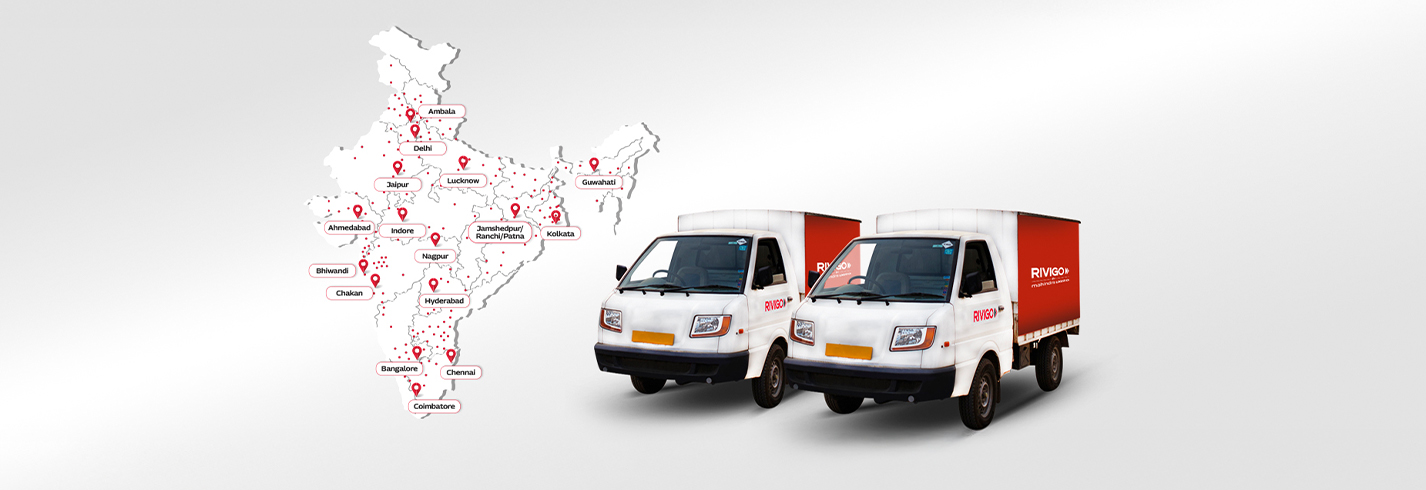
A multi-tier structure typically delivers the best balance of reach, speed, and cost: a national DC for master inventory and slow movers, regional DCs for core range, and urban depots or micro-fulfilment in dense metros to protect cut-offs. Cross-dock nodes near railheads and highway junctions compress TAT by enabling fast transshipment, PTL consolidation, and nightline moves. Decide what to insource versus partner based on coverage needs, rail access, dealer proximity, and the partner’s tech stack. Experienced automotive logistics companies in India and specialised third party logistics providers often enable faster, lower-risk scale-up.
Use ABC/XYZ segmentation to separate fast movers from intermittents and identify safety‑critical and immobiliser parts that require tighter policies. Calibrate safety stock by region against lead times, delivery frequency, and service commitment. Do not forget to adjust for monsoon‑affected routes or urban congestion. Enrich these rules with consumption trends, parc mix by model, and known campaign calendars to shift from static norms to data‑driven placement.
Design lanes around available auto logistics transport options so linehaul leverages rail where viable and road serves the first and last mile. PTL‑first consolidation with scheduled nightline runs between city pairs stabilises service and reduces reliance on costly express while supporting consistent auto outbound flows.
Protect quality through pack-out standards – reusable totes, adequate dunnage, and clear stacking rules – supported by loading/unloading SOPs. Digitised ePOD with condition capture closes the loop on handovers and reduces avoidable claims.
Define fixed cut-offs for same-day and next-day, and anchor routing to drop density to prevent bay idle time due to minor parts. Enforce secure, timestamped deliveries and dock/slot adherence at high‑volume workshops to maintain flow across multiple bays and technicians.
Build reverse loops for returns, warranty parts, and cores with QC at intake, and deploy dedicated auto transport services for bulky or fragile components such as glass, bumpers, and body panels to mitigate damage.
Quality and safety must be embedded at every node, not inspected only at the end. Pre-dispatch checks, torque-sensitive item handling guidelines, and seal integrity verification prevent costly errors and avoid safety incidents at the workshop.
Standard safety procedures for loading and unloading, handling of hazardous materials, and use of equipment in yards and docks protect people, parts, and assets. Regular training and audits help sustain these standards over time.
Sustainability is becoming a core decision factor for many OEMs. Solar-ready distribution centres, use of electric vehicles or twin-battery two-wheelers for last-mile runs in urban areas, and reusable packaging solutions all reduce waste and emissions.
Establish a clear scorecard that is simple to track and hard to game: OTD, line-fill, damage ratio, dwell, claim cycle time, and cost per drop. Run monthly ops reviews with seasonal playbooks for festivals, monsoon risk, and launch cycles, and maintain a kaizen backlog to convert insight into action. Benchmark lanes and nodes, replicate what works at pace, and retire underperforming patterns to keep the network lean and predictable.
Scale and specialisation amplify outcomes: access to nationwide nodes, rail registrations, and 24×7 operations shortens ramp-up and improves resilience. A partner with proven expertise in auto supply chain solutions brings tried-and-tested playbooks for dealer service and structured returns.
At Mahindra Logistics, we co-design networks with OEMs and dealer groups, combining multimodal capability, control towers, and disciplined execution to raise service levels while managing cost. We align planning, technology integration, and on-ground operations to turn the parts network into a strategic asset, not a cost centre within third party logistics.
An agile spare parts network compounds value through a flywheel of smart design, PTL-led multimodal execution, digital control, and continuous improvement. This is the moment to assess current lanes, inventory rules, and partner models, then co-create a roadmap with an experienced third party logistics partner.
To explore how we can help, contact us at: enquiries@mahindralogistics.com.
An agile spare parts supply chain is a logistics network designed to deliver automotive parts quickly and reliably across dealers and service centres. It combines strategic inventory placement, responsive transport networks, and real-time visibility to reduce downtime and improve service levels.
India’s growing vehicle population and expanding service networks increase demand for fast and reliable spare parts delivery. An agile network ensures workshops receive the right parts quickly so vehicles can return to the road with minimal downtime.
A multi-tier network typically includes a national distribution centre for master inventory, regional distribution centres for fast-moving parts, and smaller urban depots or hubs for rapid delivery in dense markets.
Inventory segmentation techniques such as ABC/XYZ analysis help separate fast-moving parts from slow-moving items. This allows companies to maintain higher stock availability for critical components while optimising inventory costs.
Multimodal logistics combines rail and road transportation to move spare parts efficiently across long distances. Rail can handle long-haul routes while road transport supports first-mile and last-mile delivery to dealers and workshops.
Last-mile delivery ensures spare parts reach dealers and workshops within defined service windows. Reliable last-mile execution helps workshops plan technicians and service bays without delays.
Digital tools such as warehouse management systems, tracking platforms, and analytics dashboards provide real-time visibility into inventory, shipments, and service levels. This helps logistics teams detect disruptions early and improve planning.
Key performance indicators include on-time delivery (OTD), line-fill rate, damage ratio, dwell time, and cost per drop. Tracking these metrics helps companies continuously improve service quality and supply chain efficiency.