


FY 2023–24 was a landmark year for India’s renewable energy sector, as the country added an unprecedented 18.48 GW of new capacity. The projects behind that number involved thousands of components moving across the country, often to sites with poor road access, no nearby
warehousing infrastructure, and zero tolerance for delays.
The renewable energy supply chain is one of the most demanding logistics environments today. For solar panels, wind turbine blades, transformers and battery storage systems, each project runs on a long list of parts that need to arrive in the right sequence, in the right condition,
at exactly the right time.
When material movement falls behind, or inventory visibility is poor, it is not just an operational inconvenience. It pushes commissioning dates, increases holding costs, and puts contractual commitments at risk. Getting logistics strategy right from the start is what separates projects
that run on schedule from those that spend months recovering from avoidable delays.
Most infrastructure sectors involve complexity. Renewable energy involves a particular kind of complexity that standard logistics models tend to underestimate.
The challenges that show up most consistently across renewable energy projects are worth examining individually, because each one requires a different response.
1. Coordinating Deliveries Across Multiple Sites
Getting deliveries coordinated across multiple active sites is harder than it sounds.
2. Handling Large and Sensitive Equipment
Handling the equipment itself is another area where things go wrong more often than they should.
3. Reducing Transit Delays and Material Losses
Transit delays and material losses tend to be symptoms of a deeper visibility problem.
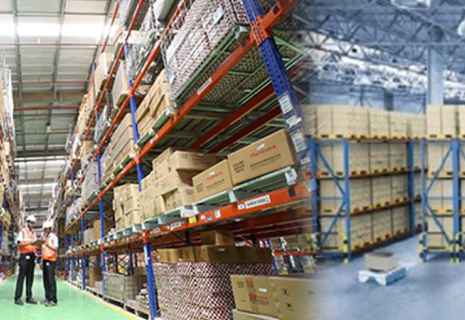
A warehouse serving a renewable energy project is not a passive storage point. It is the link between what procurement has ordered and what the site actually receives, and how that link functions determines whether installation crews have what they need when they need it.
1. Real-Time Inventory Tracking
Real-time inventory tracking across warehouses, transit, and project sites gives project teams something they rarely have with traditional warehouse management: an accurate, current picture of material availability. Digital monitoring removes the reliance on manual stock counts and the delays that come with them. Teams can see what is in storage, what is on the way, and what needs to be ordered, before a shortage creates a site-level problem.
2. Optimising Storage for High-Value Components
Storage practices matter too, particularly for high-value components. Proper racking, appropriate environmental conditions, and strict accuracy protocols reduce in-storage damage and speed up material retrieval when site teams are waiting.
3. Enabling Better Decision-Making Through Data
Data from warehouse operations also feeds into better demand forecasting and replenishment planning, helping project managers avoid both the cost of excess stock and the disruption of running short at a critical stage.
When transportation, warehousing, and site delivery are managed separately, the gaps between them become the source of most project delays.
Mahindra Logistics supports complex industrial sectors with integrated logistics capabilities built around these requirements, end-to-end coordination that keeps renewable energy projects moving without the fragmentation that typically slows them down.
Projects in this sector are won or lost on execution. The engineering may be sound, the financing may be in place, and the contracts may be signed, but if the renewable energy supply chain cannot deliver materials reliably and on time, none of that is enough.
Organisations that treat logistics strategy, warehouse management, and 3PL solutions as core project infrastructure consistently outperform those that treat them as secondary concerns. As India’s energy transition accelerates, supply chain capability will increasingly be what separates the projects that deliver from those that fall behind.
To discuss how integrated logistics can support your renewable energy projects, reach out at enquiries@mahindralogistics.com.